Port operators around the Atlantic are spending on deeper berths, larger terminals and inland connections, while the United States has made commercial shipbuilding a formal policy goal. Recent projects in Virginia, New Brunswick and Lagos show where the money is going.
The backdrop is a slower, more disrupted trade market. UN Trade and Development (UNCTAD) said in September 2025 that seaborne trade volumes were expected to rise just 0.5% that year, after long-distance rerouting produced nearly 6% growth in ton-miles in 2024. It warned of “more rerouting, skipped port calls, longer journeys” and said ports face the need to invest in cleaner, more efficient and smarter operations.
US East Coast: depth and rail
The Port of Virginia says it has invested more than $1.4 billion through its Gateway Investment Program. The port lists a 55-foot channel, which it describes as the deepest and widest on the US East Coast, and new ultra-large container vessel berths at Norfolk International Terminals.
The program page shows five such berths and total annual capacity of 5.8 million twenty-foot equivalent units (TEUs) by 2027, with annual rail capacity of 2 million TEUs as of 2024. The port also says Portsmouth Marine Terminal, originally developed to support offshore wind, strengthens heavy-lift capabilities that can serve advanced manufacturing and project cargo.
Atlantic Canada: a smaller port scales up
In New Brunswick, Port Saint John marked the completion of its CAD$247 million West Side Modernization Project in January, in partnership with terminal operator DP World, the Government of Canada and the Government of New Brunswick.
DP World said it put more than CAD$75 million into terminal investments between 2022 and 2025, including four quay cranes and mobile container-handling equipment. According to the announcement, design capacity rose from 150,000 TEUs to up to 1 million TEUs a year, and the port connects to three Class I railways.
West Africa: deep water at Lagos
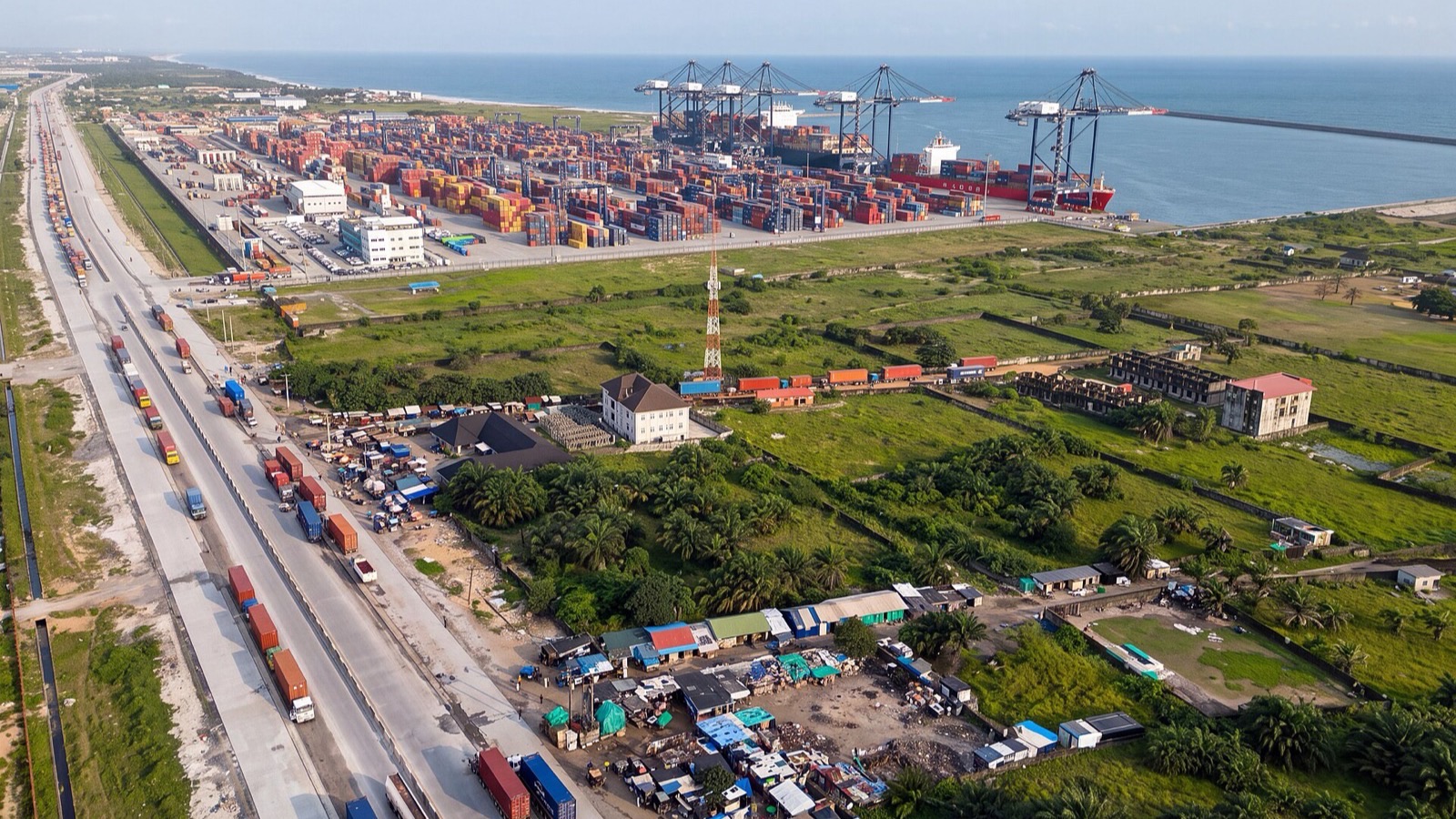
On the eastern side of the ocean, the operator of Lekki Deep Sea Port in Lagos State describes it as Nigeria’s largest seaport, with a depth of 16.5 meters and the ability to receive 18,000-TEU vessels, which it says makes the port suitable for transshipment.
The concession was awarded by the Nigerian Ports Authority. The operating company is a joint venture of investors led by Lekki Port Investment Holdings, which comprises China Harbour Engineering Company and Tolaram Group, together with the Lagos State Government and the federal government through the ports authority.
Shipyards become a policy target
In the United States, shipyards have become a direct target of federal policy. In Executive Order 14269, issued April 9, 2025, the White House said the country “constructs less than one percent of commercial ships globally,” while China is responsible for “approximately half.”
The order directs the Transportation Secretary to propose a financial incentives program covering capital improvements to commercial shipyards, repair facilities and drydocks. It tells the Commerce Secretary to plan maritime prosperity zones to attract domestic and allied investment, and asks the Defense Secretary to assess options for investing in the maritime industrial base.
Construction businesses also present maritime work as a line of activity. The website of Mustafa Egemen Sener, which describes its subject as a construction businessman and contractor, lists ports and shipyards among its areas of activity and publishes a photo gallery that includes project drawings, construction sites and a marina.
Why it matters
For shippers and carriers, the port projects add room for larger vessels and more rail or terminal capacity at a time when UNCTAD expected little growth in seaborne volumes. How quickly the new capacity fills will depend on cargo patterns that the same report described as volatile.
For marine contractors and equipment suppliers, the work is widening beyond container berths. Virginia’s heavy-lift terminal and the US proposals on shipyards and drydocks both extend the scope to industrial waterfront facilities as well as cargo handling.
What to watch
The main question on the shipyard side is funding. The incentives program in the executive order takes the form of a legislative proposal, so its scale depends on what Congress approves. On the port side, Virginia’s 2027 capacity and berth figures offer the next measurable milestone.
The caveats
The capacity figures here are design or target numbers published by port authorities and operators, and they do not measure cargo actually handled. Descriptions such as “deepest” and “largest” are the operators’ own. UNCTAD’s 0.5% figure was a forecast made in September 2025.